Stand in front of your bookshelf right now. Be honest — does it look intentional, or does it look like a place things end up when you don’t know where else to put them? Most of us are guilty of the second one.
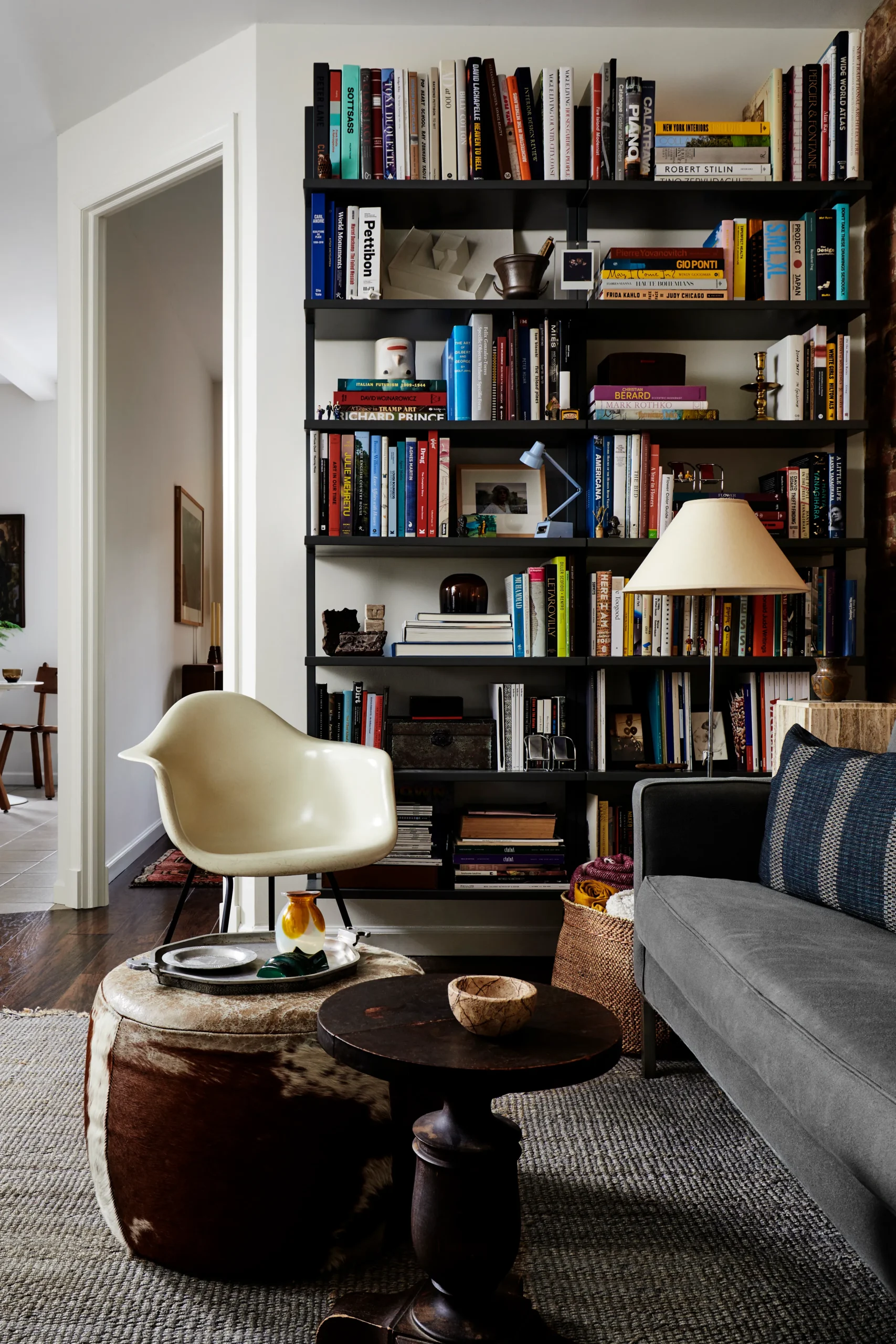
Learning how to style bookshelves properly isn’t about owning fancy decor pieces. It’s about a handful of simple rules — spacing, grouping, and a bit of restraint — that turn a shelf full of random stuff into something people actually stop and look at. I redid mine last year after getting genuinely tired of it looking like a storage unit, and the difference took maybe two hours.
Let’s break down exactly how to do it, section by section.
Why Most Bookshelves End Up Looking Messy
The short answer: everything is fighting for attention. Books packed spine-to-spine with no breaks, random knick-knacks squeezed into leftover gaps, nothing grouped by color or height — it’s visual noise, not decor.
Once you understand how to style bookshelves, you’ll notice the same pattern in almost every well-designed room online: negative space. Empty space isn’t wasted space on a shelf — it’s what makes everything else look deliberate.
Start by Editing Before You Decorate
Here’s the part everyone skips, and honestly, it’s the most important one. You can’t style a shelf that’s overflowing. Before you touch decor items, pull everything off and sort it into three piles.
- Keep on the shelf (books you actually reference or love, plus a few decor pieces)
- Store elsewhere (books you’re keeping but don’t need on display)
- Donate or sell (be ruthless here — that college textbook isn’t coming back)
A shelf styled with 60% of its original content almost always looks better than the same shelf with everything crammed in. Less genuinely is more here, even if it feels wasteful to hide half your books away.
The 70-30 Fill Rule
Aim to fill roughly 70% of the shelf space and leave 30% open. A completely packed shelf reads as storage; a shelf with breathing room reads as design.
Group Books By Color, Not Just Height
This is probably the single biggest shift people notice. Grouping by color creates a visual rhythm that grouping by size or genre just doesn’t.
Try this approach:
- Sort your books into rough color families (warm tones, cool tones, neutrals, black/white)
- Place the darkest colors toward the bottom shelves — it grounds the whole unit visually
- Let lighter colors and neutrals sit higher up
I’ll admit, some people hate this method because it makes finding a specific book by title annoying. Fair point. If you actually use your shelf as a working library, group by genre instead and just keep spacing tight and even. Function matters more than looking pretty for a photo.
Mix Vertical and Horizontal Stacking
Books stacked flat, lying on their sides, give your eye a place to rest between all the upright spines. It also gives you a surface to prop small decor items on top of.
A good ratio: about 2 vertical rows of books for every 1 horizontal stack, per shelf. Too many horizontal stacks and the whole thing starts to look unstable and messy rather than curated.
Use the Rule of Three (and Sometimes Break It)
Grouping decor items in threes is such a well-worn design rule it’s almost a cliché at this point — but it works because odd numbers create visual movement that pairs just don’t.
A classic three-item shelf grouping might look like:
- A stack of 3-4 horizontal books
- One taller object (a vase, a small sculpture, a framed photo standing up)
- One low, wide object (a small bowl, a candle, a smooth stone)
Picture a Bengaluru apartment owner setting up a small home office nook. Instead of buying a full matching decor set for ₹15,000, they used what they already had — an old brass diya, a stack of paperbacks, and a single potted pothos — arranged in threes across two shelves. The whole nook cost them under ₹500 in a new plant and looked more put-together than half the styled shelves online.
Bring in Plants for Life and Texture
Plants soften a shelf full of hard edges — books, frames, ceramics — instantly.
A trailing plant like pothos or a string of hearts works especially well on upper shelves, where it can spill down naturally over the edge. On lower shelves, something more compact like a snake plant or a small succulent holds its shape better and needs less fuss. Either way, one plant per two to three shelves is usually enough — more than that and it starts competing with everything else.
Vary the Heights, Deliberately
Nothing kills a shelf’s visual interest like everything sitting at the same height. Your eye needs some rise and fall to actually register the arrangement as designed rather than just placed.
A quick trick: use books themselves as risers under smaller objects. A short stack under a small frame or vase instantly adds height variation without buying a single new prop.
[link to related guide on vintage home decor ideas here]
Common Mistakes That Ruin an Otherwise Good Shelf
I’ve made most of these myself over the years, so this list comes from experience, not just theory.
- Overcrowding every single shelf equally instead of varying the density
- Using decor items that are too small — they get visually lost next to books
- Ignoring the backboard of the shelf (a coat of paint or wallpaper behind open shelving adds a lot for very little effort)
- Matching every object’s color to the wall — it flattens the whole display instead of making it pop
[link to related guide on small space storage solutions here]
FAQs About How to Style Bookshelves
How many books should be on a styled shelf? Roughly 60-70% of the shelf’s total capacity works best visually. A fully packed shelf reads as storage, not decor, so leaving deliberate gaps actually makes the display look more intentional.
Should I organize books by color or by author/genre? Depends on your priority. Color grouping looks more visually striking for open display shelves, but if you actually use the shelf to find books quickly, genre or author order will serve you better day to day.
What decor items work best on bookshelves besides books? Small plants, framed photos, ceramic bowls, candles, and one or two taller sculptural objects tend to work well. Keep the total number of non-book items modest — three to five per shelf is usually plenty.
How do I style a bookshelf on a tight budget? Use what you already own first. Old jars, plants from cuttings, and books you already have, stacked and rearranged thoughtfully, cost nothing and usually look better than a shelf full of newly bought matching decor.
Do open shelves need a backboard or backing? Not strictly, but it helps a lot. A painted or papered backboard adds contrast and makes the objects on the shelf stand out far more than a plain wall behind it.
How often should I restyle my bookshelf? There’s no fixed rule, but swapping a few items seasonally, or whenever you get bored of the look, keeps it feeling current without needing a full redo each time.
Final Thoughts
Getting how to style bookshelves right really comes down to three things: edit ruthlessly, group with intention, and leave some empty space to let it all breathe. None of it requires a big shopping trip — most of the improvement comes from rearranging what you already own.
Pick just one shelf today. Pull everything off, sort it by the three-pile method above, and put back only what earns its spot. Give it ten minutes before you decide it needs new decor — chances are, you’ll be surprised how much better it looks with just what you had all along.