There’s something reassuring about filling a glass straight from the kitchen tap and taking a long drink without giving it a second thought. Yet for many households, water quality isn’t quite that simple. Perhaps the water has a faint chlorine smell, the kettle keeps collecting white deposits, or family members have started questioning whether their drinking water needs additional treatment.
These concerns don’t necessarily mean your water is unsafe, but they’re good reasons to understand what’s coming through your pipes. Fortunately, improving household water quality doesn’t have to involve complicated equipment or expensive upgrades. With the right information, you can choose a practical solution that suits your home, budget, and everyday routine.
Start by Understanding Your Water
Before buying a filter, take a closer look at your water supply. Municipal water providers generally treat water to meet applicable safety standards, but its characteristics can still vary depending on the source, distribution system, and plumbing inside your home. Private wells bring different considerations because homeowners are responsible for arranging appropriate testing.
Common concerns include hard water, sediment, chlorine taste, and certain dissolved contaminants. Each requires a different approach. Hardness, for example, is mainly caused by calcium and magnesium, while sediment may consist of rust, sand, or other suspended particles.
An unpleasant smell isn’t always a sign of contamination, and crystal-clear water isn’t necessarily free from harmful substances. That’s why testing matters. Depending on your supply and local risks, testing may include hardness, pH, total dissolved solids, and specific chemical or microbiological contaminants.
If you’re using a private well, follow local guidance for routine testing. If your municipal water suddenly changes in color, taste, or smell, contact your supplier or an appropriate local authority before assuming a household filter will solve the problem.
Knowing what needs attention makes the next decision considerably easier.
Finding a Drinking Water System That Fits Your Lifestyle
Not every home needs the same treatment equipment. A small apartment with reliable municipal water may need little more than a filter to improve taste, while a larger household with particular water quality concerns might require a more specialized setup.
The most effective drinking water systems are selected according to the water’s actual characteristics, the contaminants that need reducing, and how much treated water the household uses.
For instance, a couple who mainly wants better-tasting water for tea, coffee, and cooking may prefer a compact under-sink filter. A family that fills several bottles every morning might benefit from a higher-capacity unit with convenient dispensing.
Consider installation space as well. Countertop filters are often straightforward to set up, while under-sink units require room for the equipment, connections, and sometimes a storage tank. Some systems need electricity or a drain connection, which can affect installation costs.
It’s also worth checking how frequently filters need replacing and whether replacement cartridges are easy to find. An inexpensive purifier isn’t such a bargain if its filters are costly or difficult to obtain.
Look for independent certification relevant to the system’s intended use. Instead of relying on broad marketing promises, check which contaminants the specific model has been tested to reduce.
When Whole-House Filtration Makes Sense
Sometimes, the issue extends beyond the kitchen tap. You might notice sediment in several faucets, chlorine odors when showering, or recurring particles that suggest a problem with the incoming supply.
In these situations, whole house water filters may offer a useful solution. Installed where water enters the property, these systems treat incoming water before it reaches different fixtures and appliances.
The type of filter is particularly important. Sediment cartridges can capture suspended particles, while activated carbon may reduce chlorine and certain compounds responsible for unpleasant taste and odor. Specialized filtration media can target additional substances when the system is designed and tested for that purpose.
However, whole-house filtration isn’t automatically necessary for every property. If your only concern is drinking water taste, a smaller point-of-use filter may be more economical. Treating every gallon entering your home can add expense without providing much extra value when the problem is limited to one outlet.
Flow rate deserves attention, too. A filter that’s too small for your household’s water demand can restrict pressure when several showers or appliances operate simultaneously. Ask about rated capacity, replacement intervals, and the specific contaminants the system can address.
And remember, no single filter removes everything. If testing identifies a particular health-related contaminant, choose treatment equipment independently certified to reduce it.
Understanding Reverse Osmosis Technology
Reverse osmosis is another option worth exploring, particularly when water testing identifies dissolved substances that ordinary sediment or carbon filters may not adequately reduce.
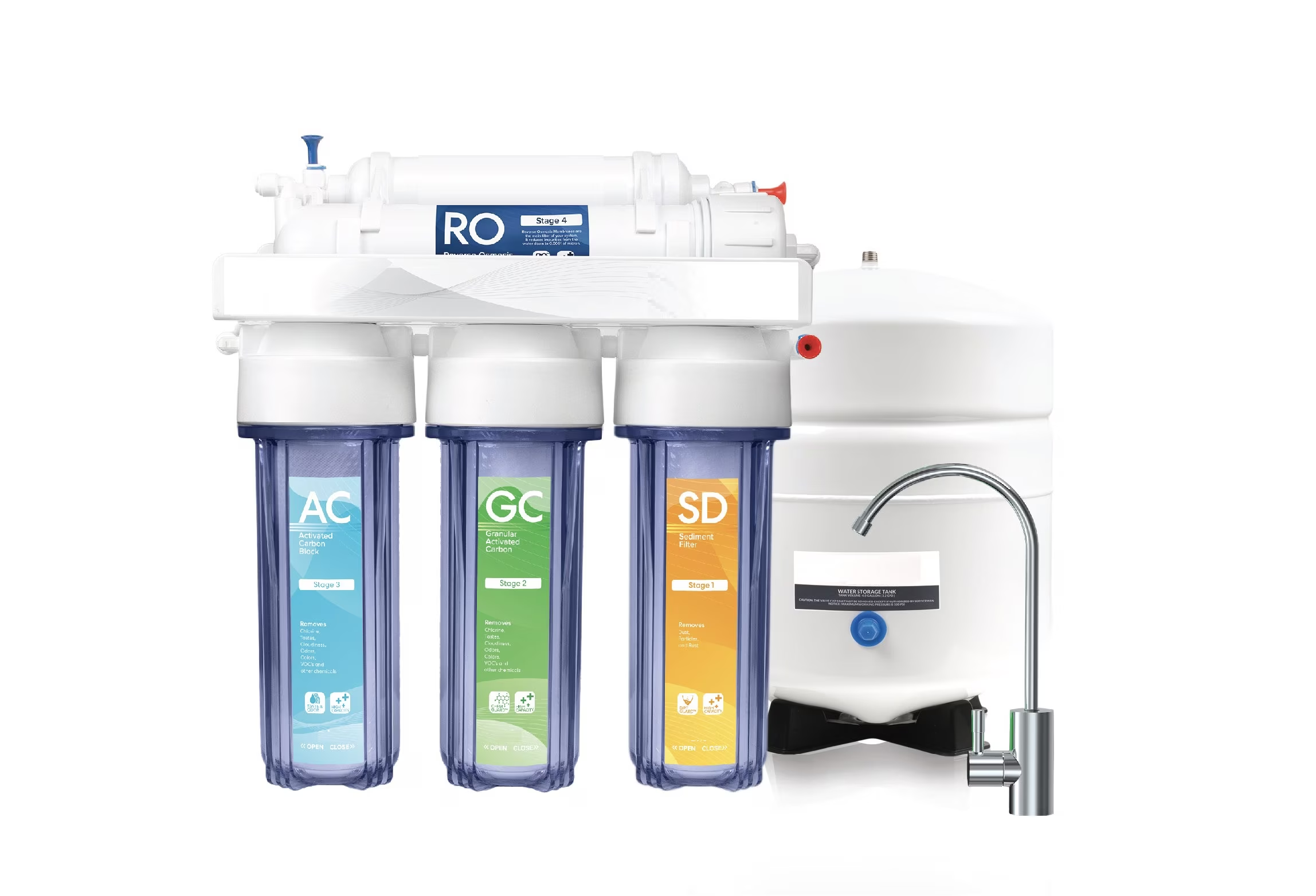
In simple terms, reverse osmosis systems use pressure to push water through a semipermeable membrane. The membrane separates much of the water from dissolved contaminants, sending treated water toward a storage tank or dispensing outlet while directing concentrated wastewater away.
Depending on the model and its certification, reverse osmosis can reduce substances such as certain dissolved salts, lead, arsenic, and other contaminants. Many residential systems combine the membrane with additional sediment and carbon filters to improve overall performance.
There are trade-offs, naturally. RO systems produce wastewater, and the amount varies with system design, incoming water pressure, temperature, and operating conditions. They also need regular filter changes and eventual membrane replacement.
Some units include a remineralization stage to adjust the taste of treated water. Others offer tankless designs that save cabinet space but have different flow and installation requirements.
Before choosing reverse osmosis, identify the substances you need to reduce and compare certified performance claims. If your water is already safe and your main complaint is a mild chlorine taste, a simpler filter may be enough.
Installation and Maintenance Shouldn’t Be Afterthoughts
It’s easy to focus on the equipment itself and overlook what happens after purchase. Yet installation quality and ongoing maintenance have a direct bearing on how reliably a treatment system performs.
For straightforward countertop filters, installation may involve little more than following the manufacturer’s instructions. Whole-house units, under-sink RO equipment, and systems involving drainage or modifications to existing plumbing may benefit from professional installation.
Ask for a breakdown of installation costs before committing. Confirm whether additional fittings, electrical connections, or plumbing work are required, and check the warranty conditions.
Once the system is operating, follow its recommended maintenance schedule. Replace filters on time, inspect accessible connections for leaks, and investigate unexpected changes in taste, odor, or water flow.
If the equipment is designed to reduce a specific contaminant, periodic testing may be appropriate to confirm that it continues to work as intended. This is especially important when the original water supply has known contamination concerns.
Good maintenance isn’t glamorous, but it’s what helps turn a promising purchase into a dependable household solution.
Balancing Cost, Convenience, and Water Quality
A sensible water treatment decision involves more than comparing purchase prices. Filter replacements, electricity, wastewater, professional servicing, and other operating expenses can influence the total cost over several years.
Start by separating essential requirements from optional features. If your water test shows elevated hardness, a softener may address the issue more directly than a drinking water purifier. If your concern involves one specific contaminant, targeted treatment may be preferable to installing several overlapping systems.
It can also help to request written recommendations from a reputable water treatment professional. Ask why a particular technology is suitable, what it will and won’t remove, and how much maintenance to expect.
Be cautious of anyone who uses a dramatic demonstration or vague claims about impurities to pressure you into an immediate purchase. Reliable testing and clear performance specifications are much more useful than sales tactics.
Making Better Water Choices for Your Home
Improving water quality doesn’t mean buying the most expensive purifier on the market. It means understanding your water, identifying the real concern, and choosing equipment that addresses it effectively.
Begin with suitable testing, compare the available technologies, and consider how installation and maintenance will fit into your routine. A compact filter may be enough for everyday drinking water, while other homes may benefit from whole-house filtration or reverse osmosis.
Whatever you choose, make sure the system’s capabilities match your needs and that replacement parts remain accessible.
Water is part of nearly everything we do at home, from preparing breakfast to filling a glass before bed. Taking a little time to choose the right treatment system can make those everyday moments more reassuring, while helping you avoid unnecessary spending and equipment that never quite delivers what you expected.